{397443b6b8b325d1a3854cbc22cdeb88db22e1714ff87f560789ba1adbd27b2d}22{397443b6b8b325d1a3854cbc22cdeb88db22e1714ff87f560789ba1adbd27b2d}2F{397443b6b8b325d1a3854cbc22cdeb88db22e1714ff87f560789ba1adbd27b2d}3E{397443b6b8b325d1a3854cbc22cdeb88db22e1714ff87f560789ba1adbd27b2d}3C{397443b6b8b325d1a3854cbc22cdeb88db22e1714ff87f560789ba1adbd27b2d}2Fsvg{397443b6b8b325d1a3854cbc22cdeb88db22e1714ff87f560789ba1adbd27b2d}3E)
Unique Routes
Through Turkey
Hand-curated paths beyond the tourist trail — crafted with care, shared without commercial agenda.
From volcanic valleys to Aegean shores — travel slowly, arrive fully.
Our Philosophy
Turkey is not a destination.
It is a thousand quiet roads waiting to be walked.
nesrinkarsavuran is a personal, entirely non-commercial project. There are no sponsored posts here, no hotel affiliates, no booking links, and no hidden agendas — only carefully curated routes gathered from years of wandering through Anatolia's valleys, coastal cliffs, ancient stone villages, and forgotten caravanserais. Every path featured on this site has been walked, driven, or sailed firsthand, chosen for its authenticity over its popularity. The goal is simple: to help curious travellers find the Turkey that most guidebooks overlook.
No booking commissions. No algorithmic recommendations. Just honest, first-person guidance from someone who believes the best travel memories are made on roads with no signs.
Written & curated by
NESRİN KARSAVURAN
Three Paths Worth
Every Step
Hand-selected routes that represent the best of Turkey's walking heritage — each mapped, walked, and documented by the curator herself.
{397443b6b8b325d1a3854cbc22cdeb88db22e1714ff87f560789ba1adbd27b2d}22{397443b6b8b325d1a3854cbc22cdeb88db22e1714ff87f560789ba1adbd27b2d}2F{397443b6b8b325d1a3854cbc22cdeb88db22e1714ff87f560789ba1adbd27b2d}3E{397443b6b8b325d1a3854cbc22cdeb88db22e1714ff87f560789ba1adbd27b2d}3C{397443b6b8b325d1a3854cbc22cdeb88db22e1714ff87f560789ba1adbd27b2d}2Fsvg{397443b6b8b325d1a3854cbc22cdeb88db22e1714ff87f560789ba1adbd27b2d}3E)
Coastal Izmir to Ayvalık
The Aegean Olive Trail
Wind through ancient olive groves older than memory itself, past ruined aqueducts and sleepy fishing villages where the Aegean shimmers in shades of jade and cobalt. This route rewards the unhurried traveller.
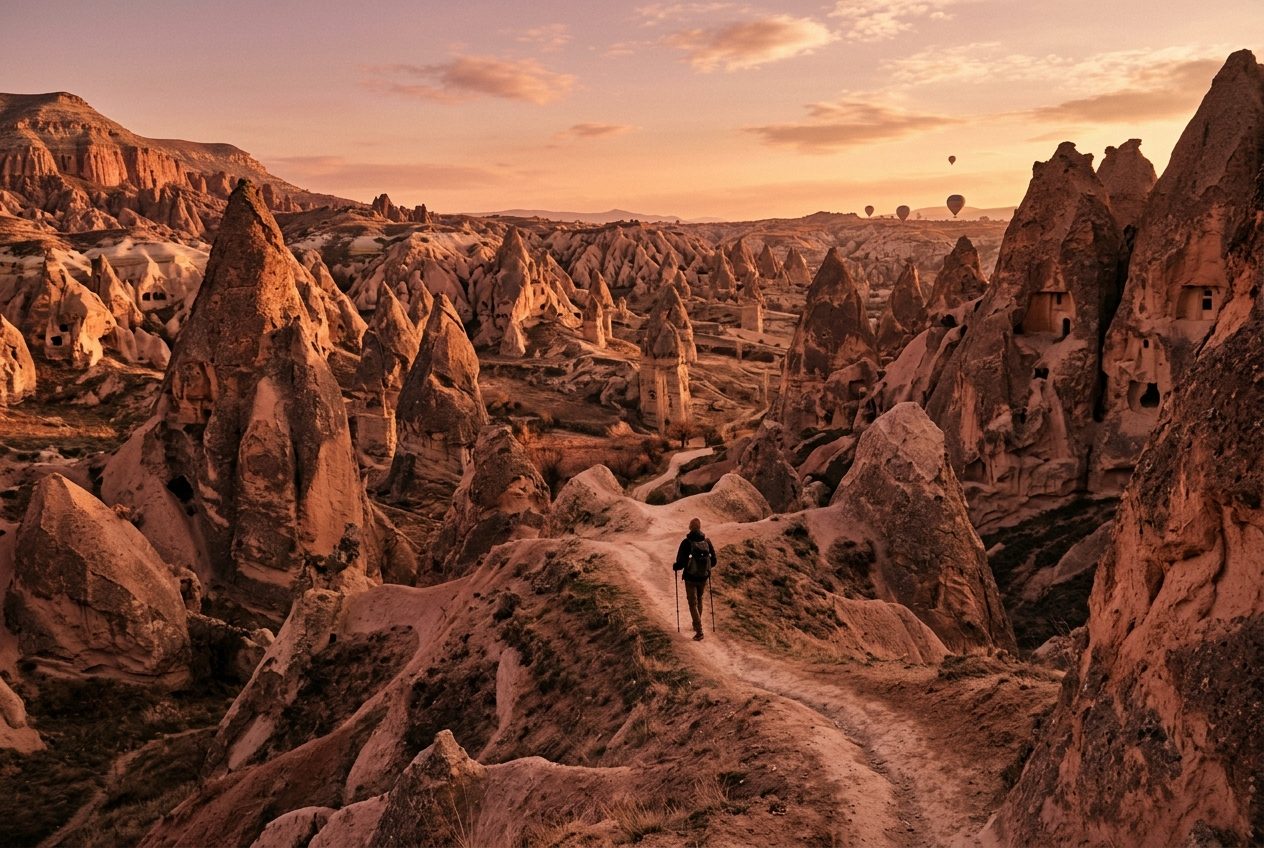
Göreme to Ihlara
Cappadocian Valley Walk
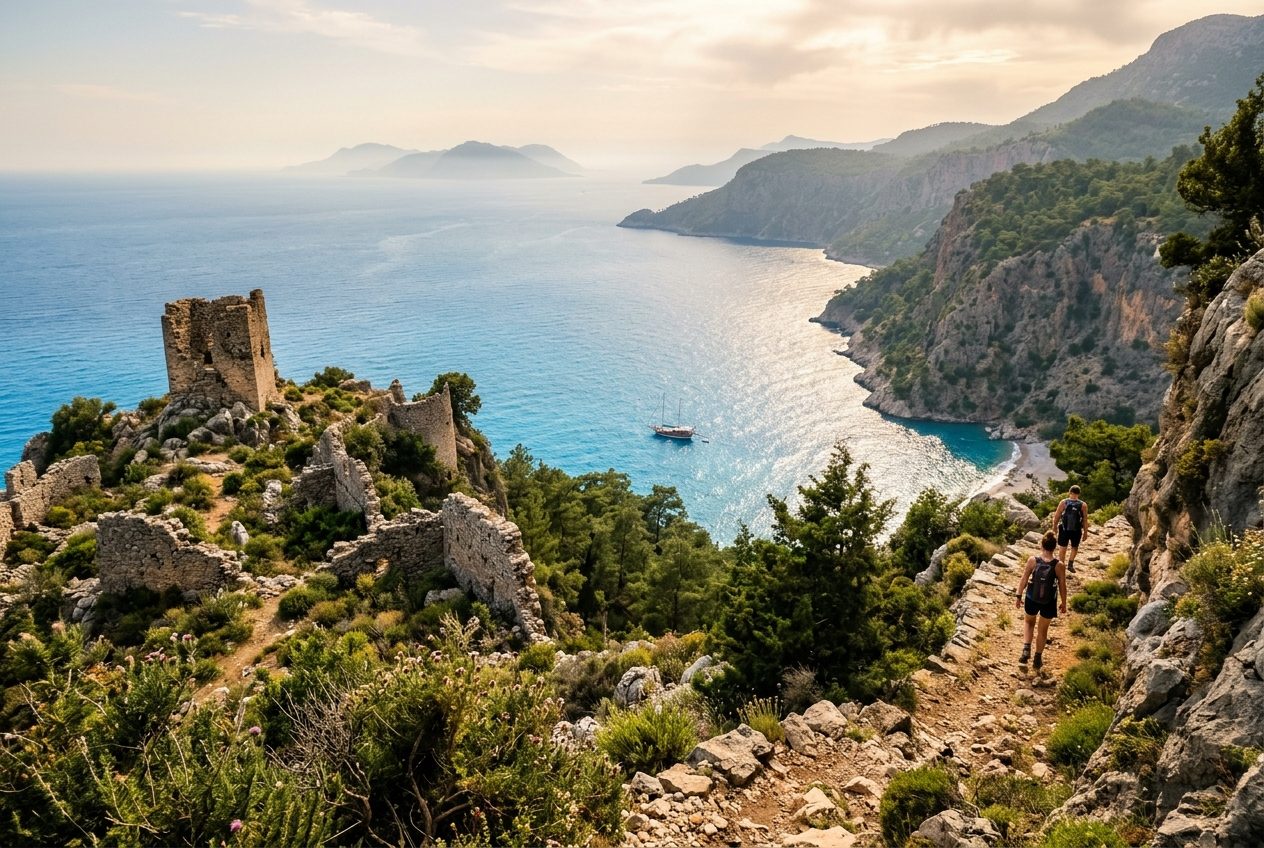
Ölüdeniz to Kaş
The Turquoise Coast Path
Turkey's Routes, Region by Region
Choose your region, find your path.
All Regions
AegeanOlive groves, ancient ruins & turquoise covesMediterraneanLycian Way, cedar forests & sun-baked cliffsMarmaraByzantine echoes, rolling hills & sea crossingsCentral AnatoliaCappadocia valleys, salt lakes & steppe trailsBlack SeaMisty plateaus, tea gardens & forested ridgesEastern AnatoliaMount Ararat, volcanic lakes & ancient kingdomsBrowse All Routes →Hover over any region on the map to preview its character — click to explore its routes.
The Ancient
Lycian Way —
540 km of
Coastal History
Stretching from the sun-bleached ruins of Fethiye to the wind-carved cliffs of Antalya, the Lycian Way is one of the world's great long-distance footpaths — and Turkey's first. Waymarked in 1999 by Kate Clow and her team, the trail traces a civilisation that flourished along this coastline over 2,500 years ago. Lycian rock tombs loom above the path like sentinels; sarcophagi sit half-swallowed by village squares; temples and amphitheatres emerge without warning from the scrub-oak forest.
The terrain is relentlessly varied. One morning you are picking your way down a limestone ridge with the Aegean shimmering a thousand metres below; the next, you are wading through a river delta, boots in hand, to reach a deserted beach accessible only on foot. Villages like Kabak, Gey and Bel offer simple pension beds and home-cooked gözleme — the informal hospitality network that makes independent travel here genuinely joyful rather than merely possible.
The ideal windows are April–May and October–November, when temperatures sit between 18 °C and 26 °C, wildflowers carpet the headlands, and the summer crowds have either not yet arrived or already departed. Midsummer is possible but demanding: exposed ridgelines reach 35 °C by mid-morning, and water sources marked on older maps may have dried. Most walkers complete the full route in five to seven weeks, though the trail's modular nature makes it perfect for week-long sections tackled across multiple seasons.
Route at a Glance
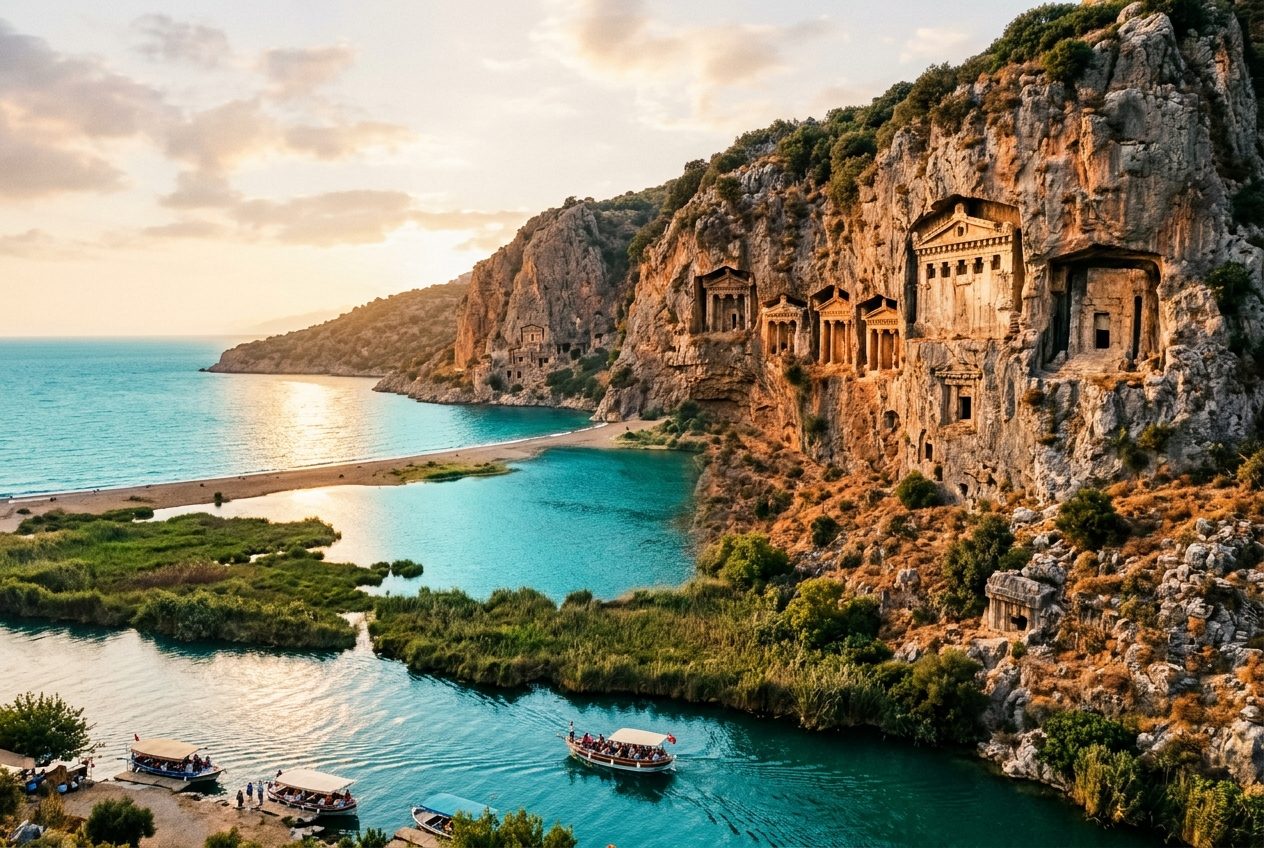
{397443b6b8b325d1a3854cbc22cdeb88db22e1714ff87f560789ba1adbd27b2d}22{397443b6b8b325d1a3854cbc22cdeb88db22e1714ff87f560789ba1adbd27b2d}2F{397443b6b8b325d1a3854cbc22cdeb88db22e1714ff87f560789ba1adbd27b2d}3E{397443b6b8b325d1a3854cbc22cdeb88db22e1714ff87f560789ba1adbd27b2d}3C{397443b6b8b325d1a3854cbc22cdeb88db22e1714ff87f560789ba1adbd27b2d}2Fsvg{397443b6b8b325d1a3854cbc22cdeb88db22e1714ff87f560789ba1adbd27b2d}3E)
{397443b6b8b325d1a3854cbc22cdeb88db22e1714ff87f560789ba1adbd27b2d}22{397443b6b8b325d1a3854cbc22cdeb88db22e1714ff87f560789ba1adbd27b2d}2F{397443b6b8b325d1a3854cbc22cdeb88db22e1714ff87f560789ba1adbd27b2d}3E{397443b6b8b325d1a3854cbc22cdeb88db22e1714ff87f560789ba1adbd27b2d}3C{397443b6b8b325d1a3854cbc22cdeb88db22e1714ff87f560789ba1adbd27b2d}2Fsvg{397443b6b8b325d1a3854cbc22cdeb88db22e1714ff87f560789ba1adbd27b2d}3E)
Full waypoint maps, accommodation list, resupply towns and seasonal notes included.
Read Full Route GuideFive Things to Know Before You Set Off
Best Time to Visit
April–June and September–October offer mild weather, fewer crowds, and vibrant local life across most of Turkey's regions.
Local Transport
Dolmuş minibuses connect villages and towns affordably. For longer distances, intercity coaches (otobüs) are comfortable and punctual.
Language Basics
A few Turkish words go a long way: Merhaba (hello), Teşekkürler (thank you), Lütfen (please). Locals deeply appreciate the effort.
Cultural Etiquette
Remove shoes before entering mosques and private homes. Dress modestly at religious sites. Accept tea when offered — it's a gesture of genuine hospitality.
Packing Essentials
Bring a lightweight scarf (for mosques and sun), sturdy walking shoes, a reusable water bottle, and a printed map for areas with limited signal.
These tips are based on independent travel experience throughout Turkey. Always check local conditions before your journey.
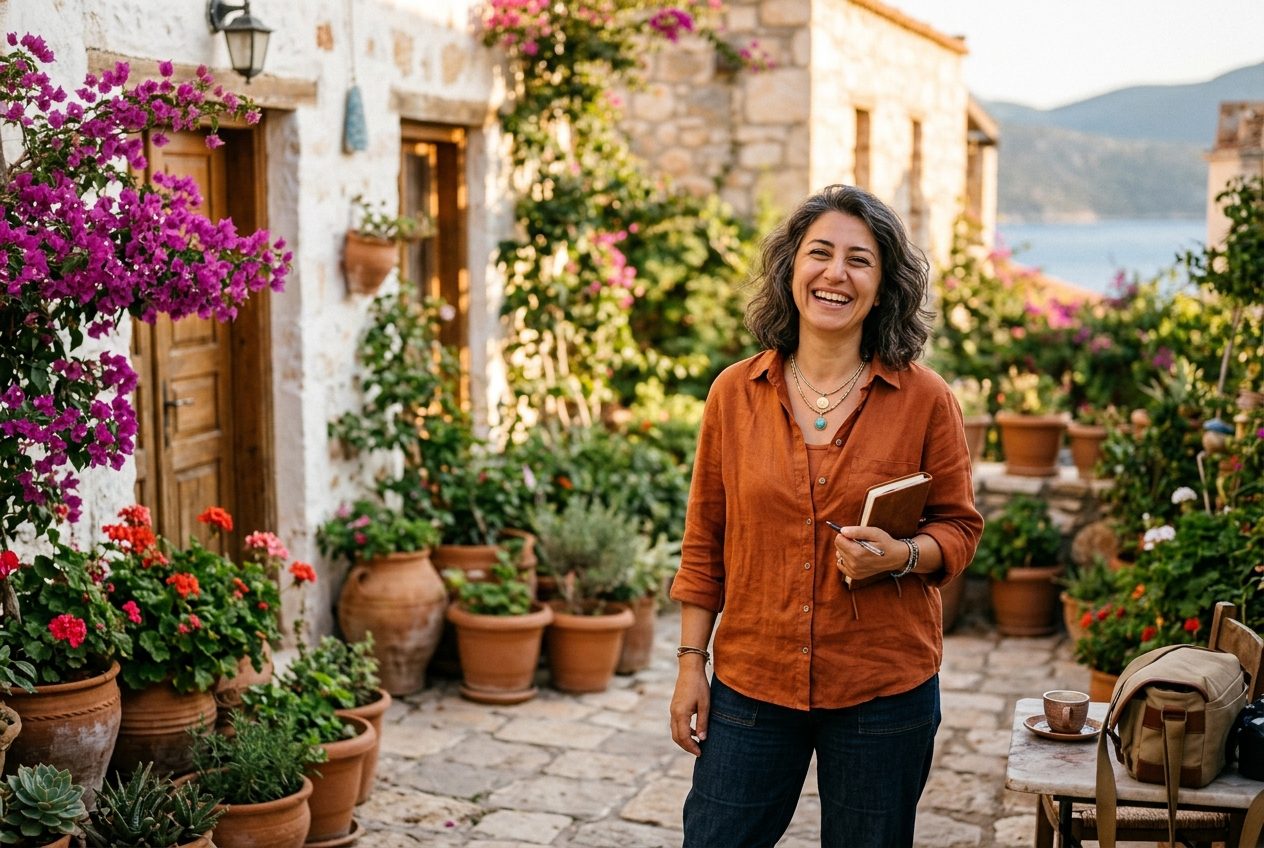
Nesrin Karsavuran
A Lifelong Journey Across Turkey's Hidden Landscapes
I grew up hearing stories about Anatolia's forgotten villages and coastal trails that no guidebook ever mentioned. That curiosity became a calling — and over the past two decades, I have walked, driven, and cycled through more than forty provinces across Turkey, from the volcanic highlands of Cappadocia to the pine-scented coves of the Lycian Way.
History has always been my compass. Every crumbling Byzantine wall, every centuries-old caravanserai on a mountain pass, tells a story that deserves to be heard. nesrinkarsavuran was born out of a simple desire: to share these routes honestly, without sponsored detours or commercial pressure — just the paths themselves, and what makes them worth taking.
These guides are written for curious, independent travellers who want to experience Turkey the way locals do — slowly, attentively, and with a deep respect for the land and its people.
"The best routes are the ones no algorithm will ever recommend — you find them by asking the person at the tea house, or by missing your turn on a dirt road."